Skip to content

proxyblue.yourcyber.news

  • Advantest confirms personal information stolen in ransomware attack

    Advantest Corporation is notifying affected individuals that a ransomware attack earlier this year exposed their personally identifiable data. […]

    This post was originally published on BleepingComputer.

    October 7, 2026
  • Anthropic Expands Claude Access for Vetted Cyber Teams as Glasswing Finds 129,000 Flaws

    Anthropic Expands Claude Access for Vetted Cyber Teams as Glasswing Finds 129,000 Flaws

    Anthropic on Tuesday said it’s expanding a program that allows vetted cybersecurity professionals to test its advanced artificial intelligence (AI) models with reduced safeguards and blocking classifiers, as the company claimed its Project Glasswing initiative uncovered at least 129,000 verified software vulnerabilities between April and July 2026.

    The company said it also found an additional

    This post was originally published on The Hacker News.

    October 7, 2026
  • 100+ Compromised Websites Use Fake Cloudflare Checks to Deliver LunexStealer

    100+ Compromised Websites Use Fake Cloudflare Checks to Deliver LunexStealer

    The Computer Emergency Response Team of Ukraine (CERT-UA) has identified more than 100 compromised websites that have been injected with malicious JavaScript to serve an information-stealing malware called LunexStealer (aka Psychedelic Stealer).

    The activity, which was observed by the agency in September 2026, has been attributed to a threat cluster dubbed UAC-0277. It did not disclose who the

    This post was originally published on The Hacker News.

    October 7, 2026
  • Ninja Forms plugin flaw exploited to hack WordPress sites

    Hackers are exploiting stored cross-site scripting (XSS) vulnerabilities in two unrelated WordPress plugins, Ninja Forms and WPC Product Bundles for WooCommerce, to install backdoors and create rogue admin accounts. […]

    This post was originally published on BleepingComputer.

    October 6, 2026
  • ClickFix Attacks Evolve to Better Hide Malicious Payloads

    ClickFix Attacks Evolve to Better Hide Malicious Payloads

    Threat actors are now hiding payloads by using DNS TXT records and browser cache pre-fetching, making it tougher to spot early attack stages.

    This post was originally published on Dark Reading.

    October 6, 2026
  • Critical Healthcare Systems Aren’t Quantum-Ready

    Critical Healthcare Systems Aren’t Quantum-Ready

    A study of 2.5 million devices across 50 healthcare organization suggests the sector has a long way to go in getting ready for the post-quantum cryptography era.

    This post was originally published on Dark Reading.

    October 6, 2026
  • Hackers exploit 32 zero-days on first day of Pwn2Own Ireland

    On the first day of the Pwn2Own Ireland 2026 competition, security researchers hacked the Samsung Galaxy S26 twice and earned $388,500 after exploiting 32 zero-days. […]

    This post was originally published on BleepingComputer.

    October 6, 2026
  • Fake ChatGPT, Gemini, and Claude Ad Portals Capture Credentials and MFA Codes

    Fake ChatGPT, Gemini, and Claude Ad Portals Capture Credentials and MFA Codes

    Cybersecurity researchers have disclosed details of a “human-operated phishing platform” that impersonates advertising products for artificial intelligence (AI) chatbots like Google Gemini, Anthropic Claude, OpenAI ChatGPT, Perplexity, Meta Muse, and Manus.

    The products, which claim to offer campaign optimization, spend audits, and business-account connections, are designed with one goal in

    This post was originally published on The Hacker News.
    October 6, 2026
  • Linux Backdoors Impersonate Email Security Tools to Evade Detection in Korea and Taiwan

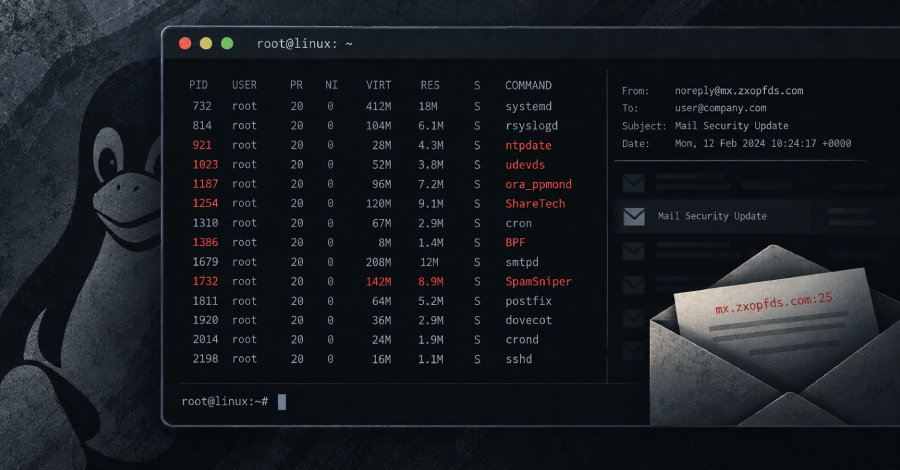
    Linux Backdoors Impersonate Email Security Tools to Evade Detection in Korea and Taiwan

    Linux backdoors targeting telecom and network appliances in South Korea and Taiwan have been disguising their traffic as email services and seemingly legitimate processes to blend in and evade detection.

    Threat actors are known to name their malicious software after a legitimate operating system component or a process as a defense evasion measure. By borrowing the name of a real binary, it may

    This post was originally published on The Hacker News.

    October 6, 2026
  • Google’s PageBreak AI Agent Finds 500 Flaws in Its Web Apps

    Google’s PageBreak AI Agent Finds 500 Flaws in Its Web Apps

    The situation illustrates a trend toward using AI and deterministic validation to identify flaws and exploitability, and provide a risk assessment.

    This post was originally published on Dark Reading.

    October 6, 2026
←Previous Page
1 … 14 15 16 17 18 … 33
Next Page→

proxyblue.yourcyber.news

  • Blog
  • About
  • FAQs
  • Authors
  • Events
  • Shop
  • Patterns
  • Themes

Twenty Twenty-Five

Designed with WordPress